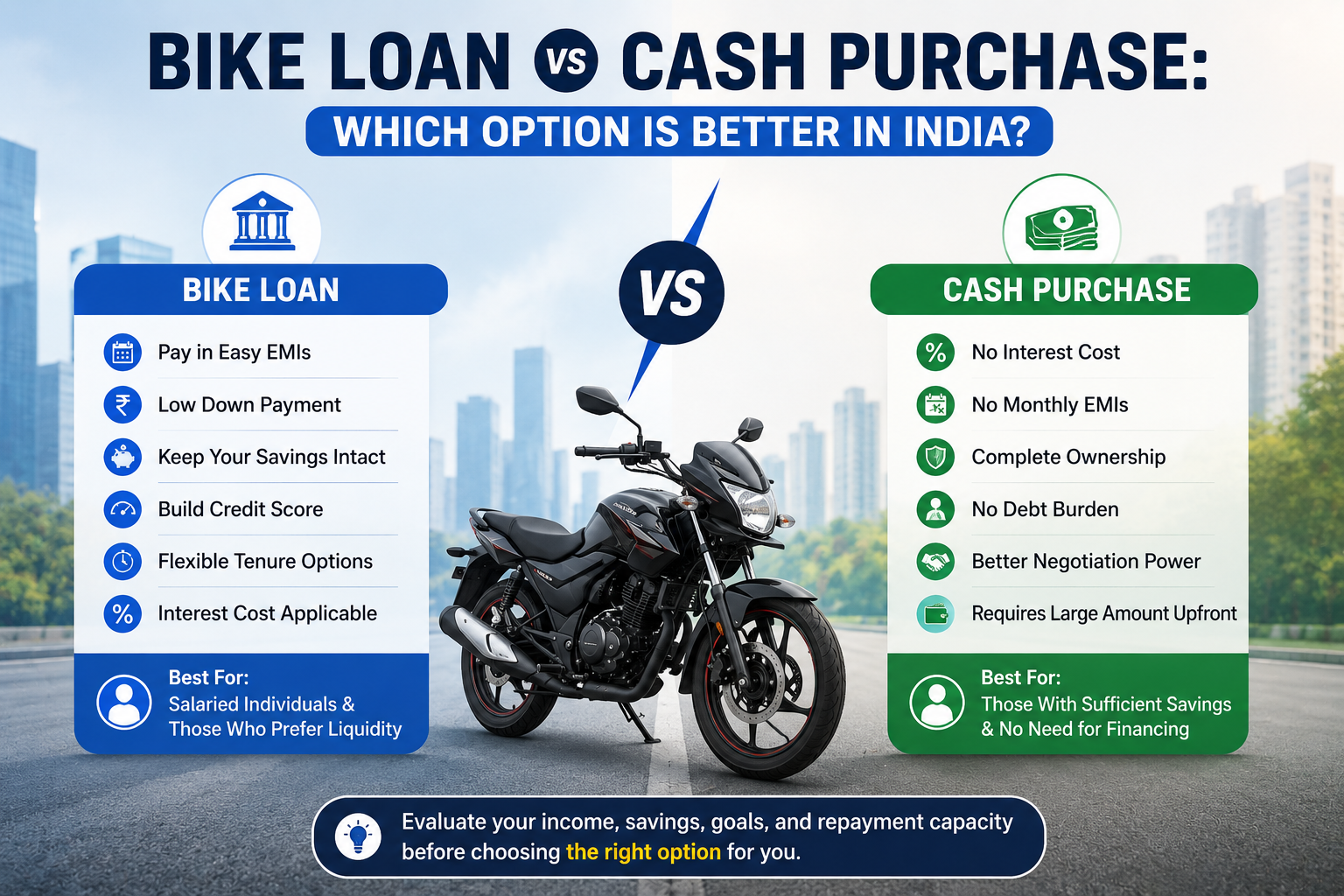
Buying a bike is a big decision for most Indian households. Whether it’s your first two-wheeler or an upgrade to a premium model, financing the purchase the right way can save you thousands of rupees over the loan tenure. With so many banks, NBFCs, and dealership tie-ups offering bike loans, it is easy to get confused about which option truly works in your favor. This guide breaks down the best bike finance tips in India so you can make an informed, budget-friendly decision.
1. Compare Interest Rates Before Choosing a Lender
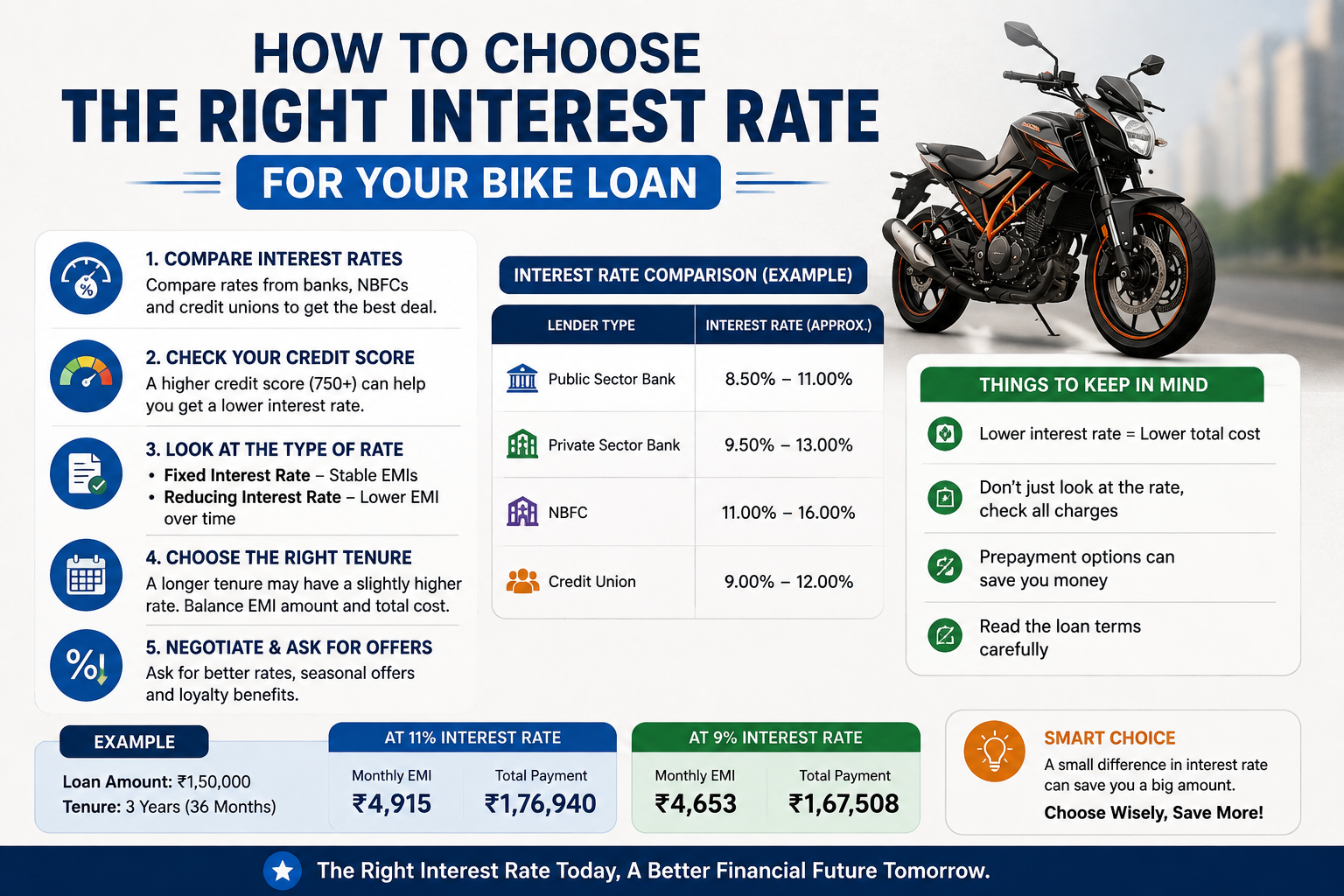
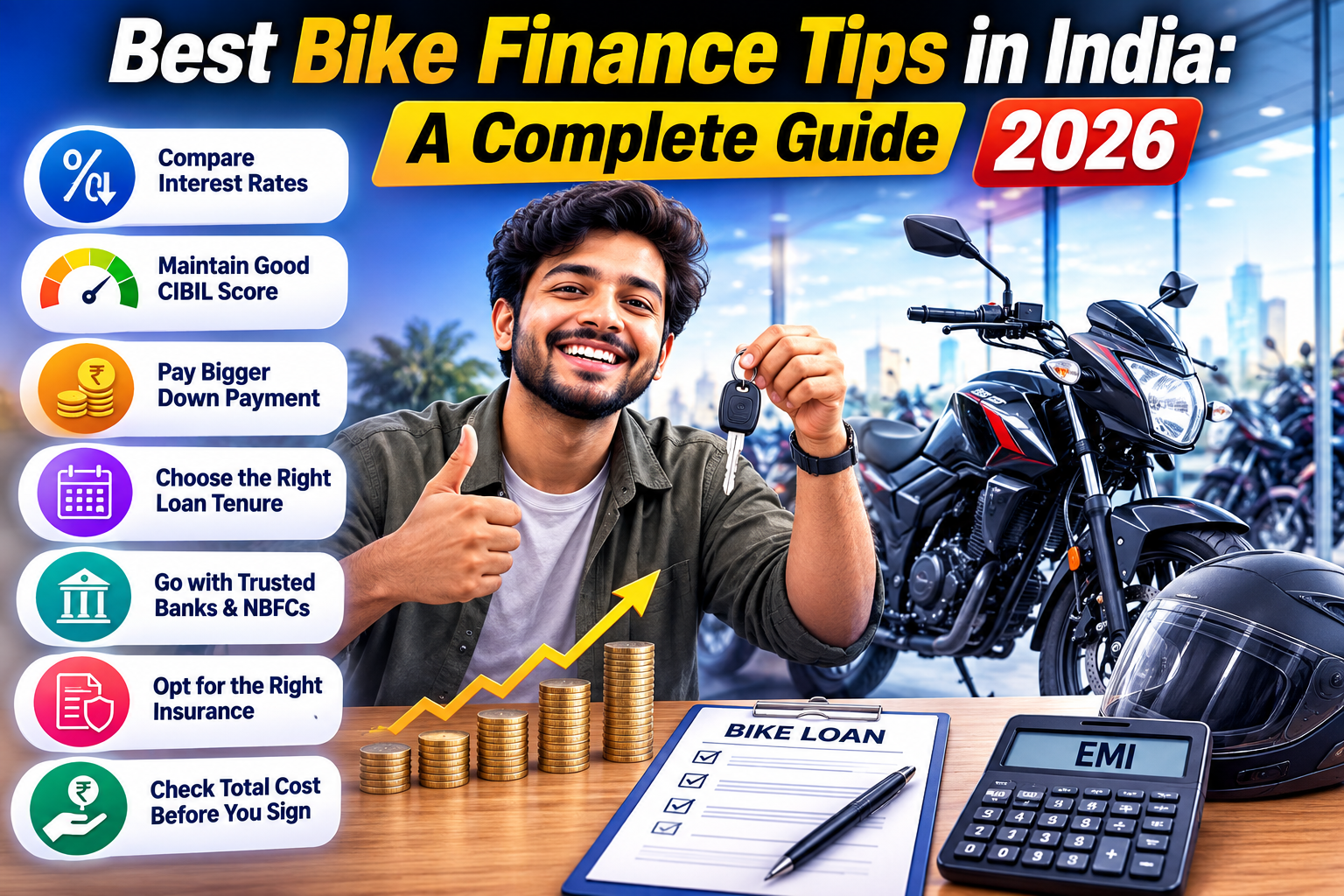
Not all lenders offer the same interest rate on two-wheeler loans. Banks, NBFCs, and dealership-linked finance companies often have different rates depending on your profile. Public sector banks sometimes offer lower rates than private NBFCs, but NBFCs may approve loans faster and with less paperwork. Always compare at least three to four lenders before signing up. Even a 1-2% difference in interest rate can change your total repayment by a significant margin over two to five years.
2. Check and Improve Your Credit Score
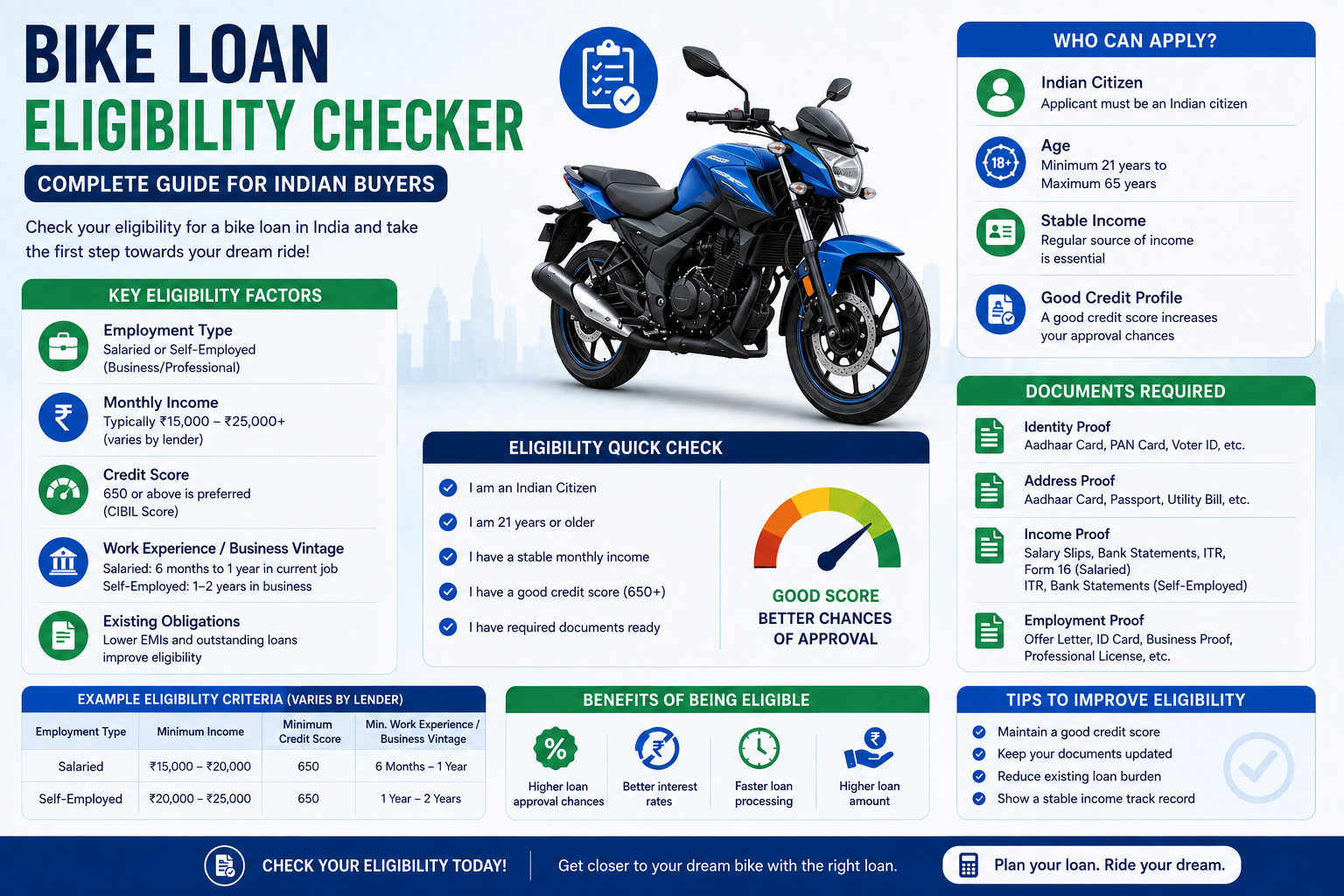
Your credit score plays a major role in deciding your loan approval and interest rate. A CIBIL score of 750 or above generally qualifies you for the best rates and quick approval. If your score is low, consider improving it before applying by paying off existing debts, avoiding multiple loan inquiries, and clearing any pending credit card dues. A better score can help you negotiate a lower rate or a higher loan amount.
3. Choose the Right Loan Tenure
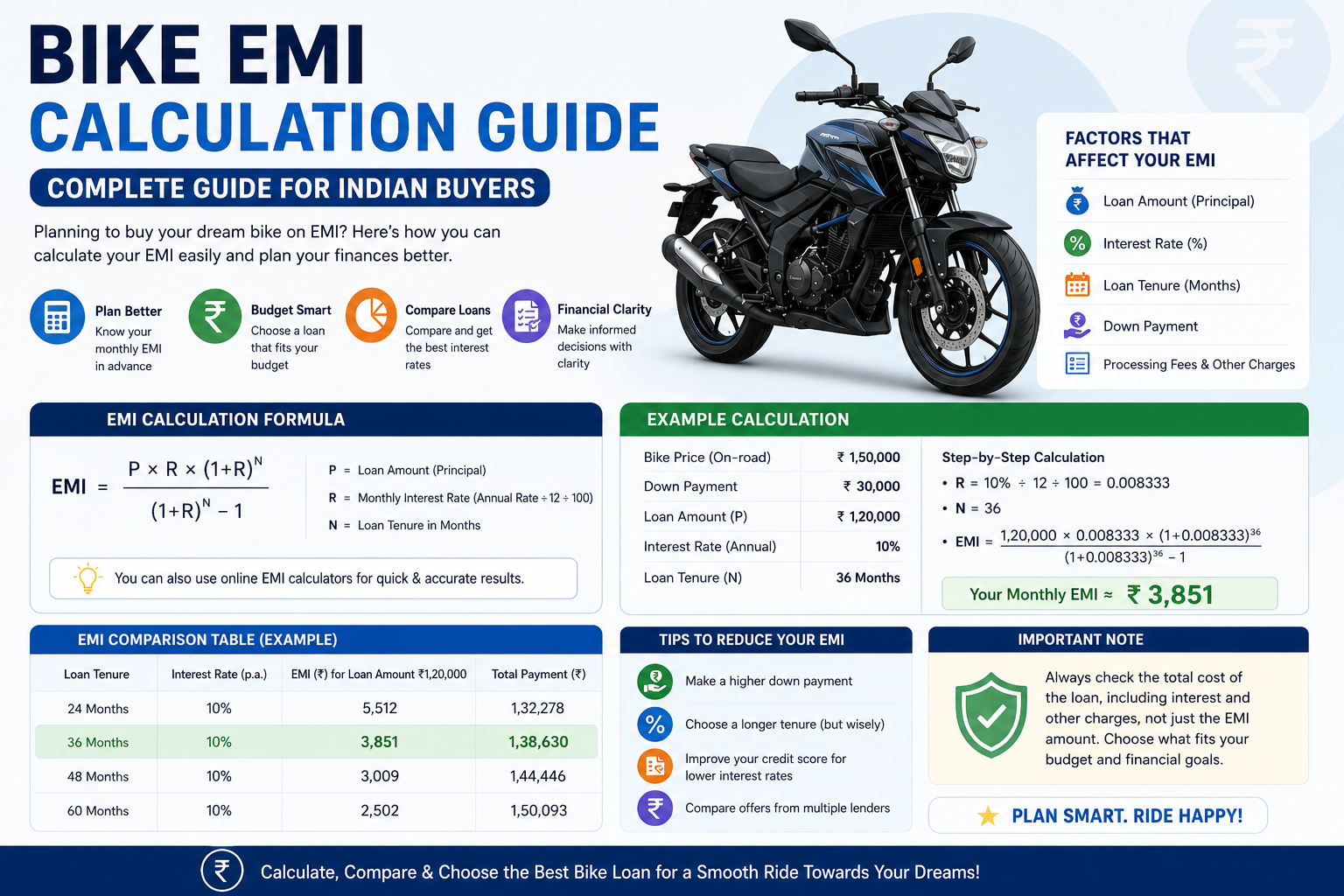
Loan tenure directly impacts your EMI and total interest outgo. A longer tenure reduces the monthly EMI but increases the total interest paid over time. A shorter tenure means higher EMIs but significant savings on interest. Ideally, choose a tenure that keeps your EMI affordable without stretching the loan unnecessarily long. Most bike loans in India range from 12 to 48 months, so pick a duration that matches your repayment capacity.
4. Make a Higher Down Payment
The more you pay upfront, the smaller your loan amount, and the lower your EMI and total interest. If you can save up and make a down payment of 20-30% instead of the minimum required, you reduce your financial burden significantly. This also improves your chances of loan approval, since lenders see a lower risk when the loan-to-value ratio is smaller.
5. Understand All Charges and Hidden Fees
Many bike buyers focus only on the interest rate and forget about additional charges like processing fees, documentation charges, late payment penalties, and prepayment or foreclosure charges. Always ask for the complete cost breakdown before signing the loan agreement. Some lenders advertise a low interest rate but recover costs through hidden fees, so read the fine print carefully.
6. Use an EMI Calculator Before Applying
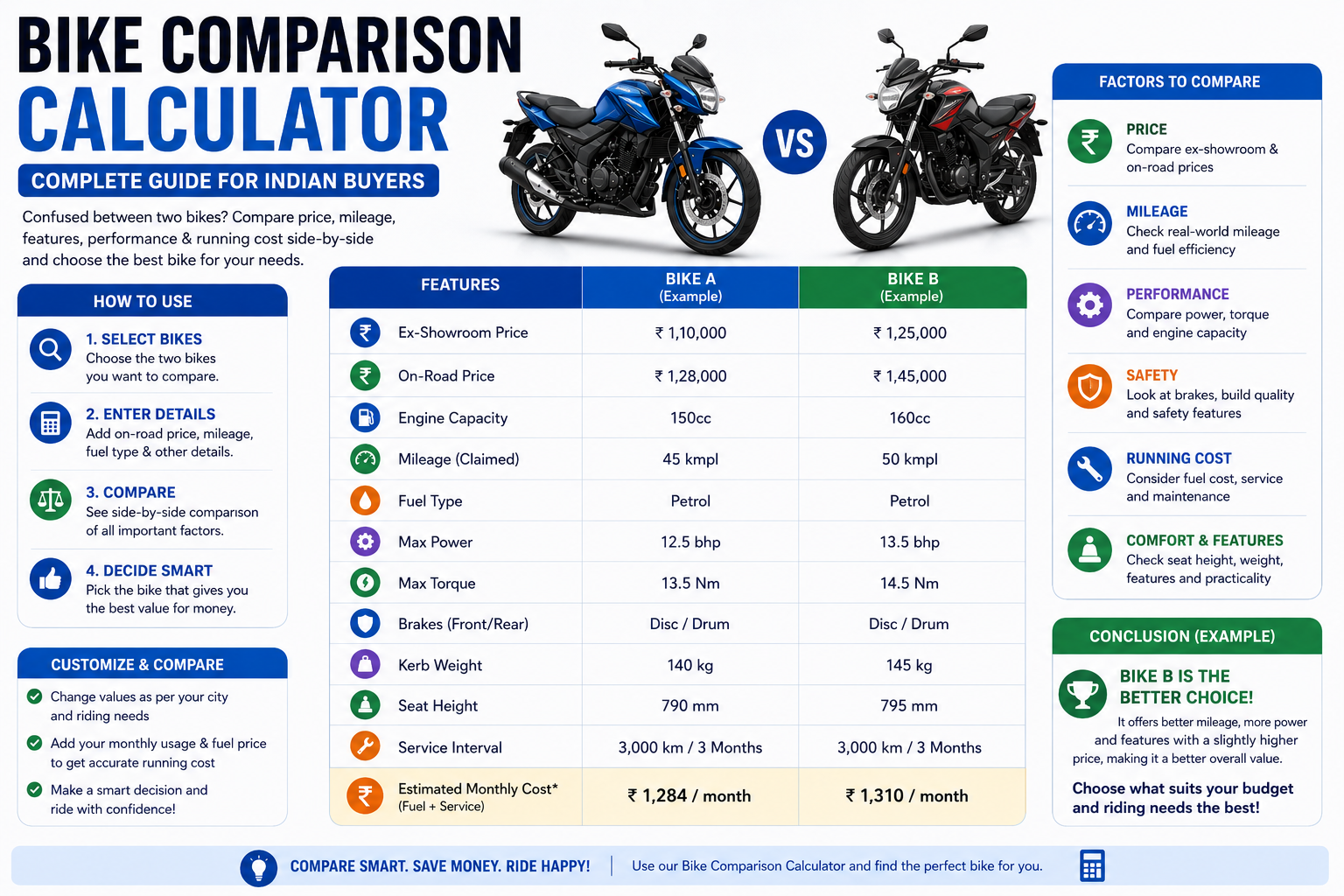
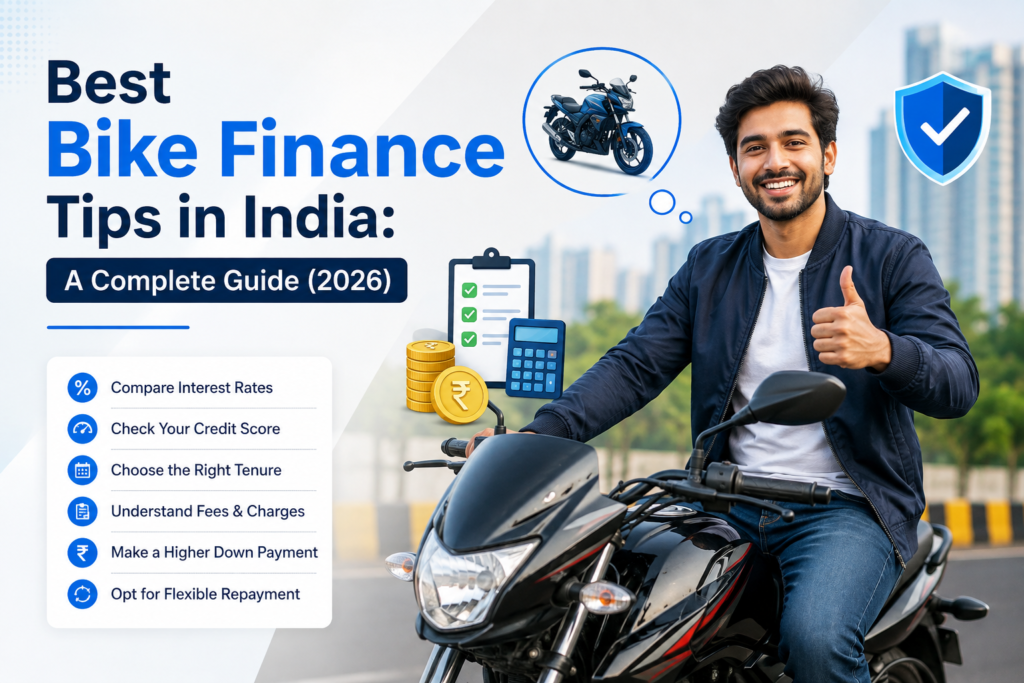
Before finalizing any loan, use an online EMI calculator to estimate your monthly outgo based on loan amount, interest rate, and tenure. This helps you plan your monthly budget and avoid over-committing to an EMI that strains your finances. Many bank and NBFC websites offer free EMI calculators that instantly show your repayment schedule.
7. Check for Prepayment and Foreclosure Options
Life circumstances change, and you may want to close your loan early if you receive a bonus or extra income. Not all lenders allow free prepayment; some charge a penalty for early closure. If flexibility matters to you, choose a lender with minimal or no prepayment charges, especially after the first six to twelve months of the loan.
8. Opt for Insurance Wisely
Many dealerships bundle insurance with the bike loan, sometimes at a higher premium than what you’d get by buying directly from an insurer. Compare insurance premiums separately and choose a comprehensive plan that offers good coverage at a reasonable cost, rather than accepting the first option presented at the dealership.
9. Negotiate the On-Road Price First
Before applying for finance, negotiate the on-road price of the bike, including registration, insurance, and accessories. A lower on-road price means a lower loan amount, which directly reduces your EMI and total interest. Dealerships sometimes inflate accessory costs, so review the price breakdown carefully.
10. Read Customer Reviews About the Lender
Beyond interest rates, customer service matters. Look for reviews about how the lender handles loan disbursal speed, customer support, and grievance redressal. A lender with a smooth process and responsive support can save you time and stress throughout the loan tenure.
Conclusion
Financing a bike in India doesn’t have to be complicated or expensive if you plan ahead. Comparing interest rates, maintaining a good credit score, choosing the right tenure, and reading the fine print can help you save money and avoid unpleasant surprises. Take your time, compare multiple lenders, and use tools like EMI calculators to make a confident and informed decision.
Frequently Asked Questions (FAQ)
Q1: What is a good credit score for a bike loan in India? A CIBIL score of 750 or above is generally considered good and helps you get lower interest rates and faster approval.
Q2: Is it better to choose a longer or shorter loan tenure? A shorter tenure saves more on total interest, though it means higher EMIs. A longer tenure lowers EMIs but increases the total interest paid.
Q3: Can I prepay my bike loan before the tenure ends? Yes, most lenders allow prepayment, but some charge a penalty. Check the loan agreement for prepayment terms before signing.
Q4: Do all banks and NBFCs offer the same interest rate on bike loans? No, interest rates vary based on the lender, your credit profile, loan amount, and tenure. It’s important to compare multiple options.
Q5: Should I take insurance from the dealership or buy it separately? Comparing insurance premiums separately is often more cost-effective than accepting the dealership’s bundled offer, so it’s worth checking both options.
Q6: How much down payment should I make for a bike loan? A down payment of 20-30% is generally recommended to reduce your loan burden and improve approval chances, though the minimum required amount may be lower.
Q7: What hidden charges should I watch out for in bike loans? Look out for processing fees, documentation charges, late payment penalties, and prepayment or foreclosure charges beyond the advertised interest rate.