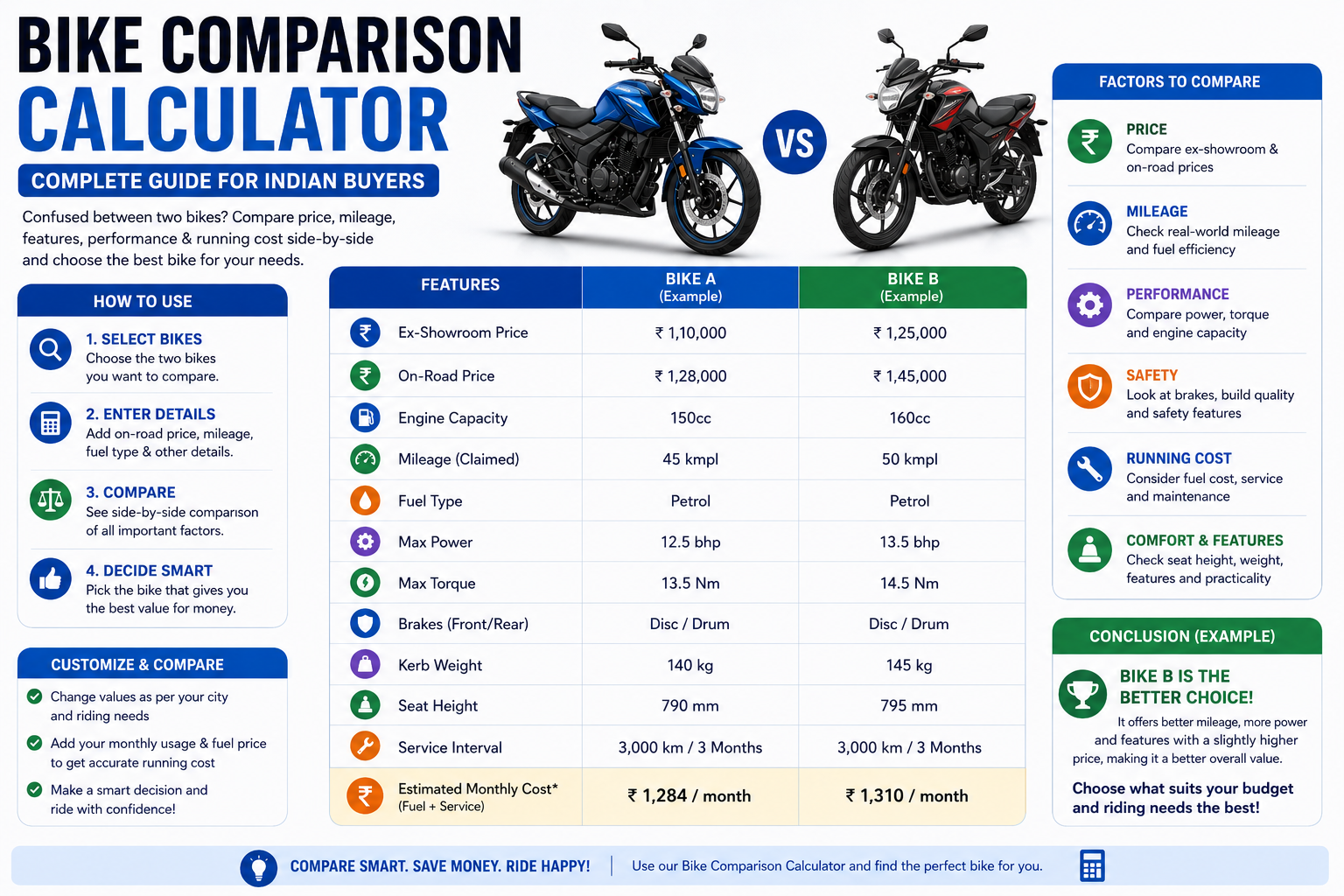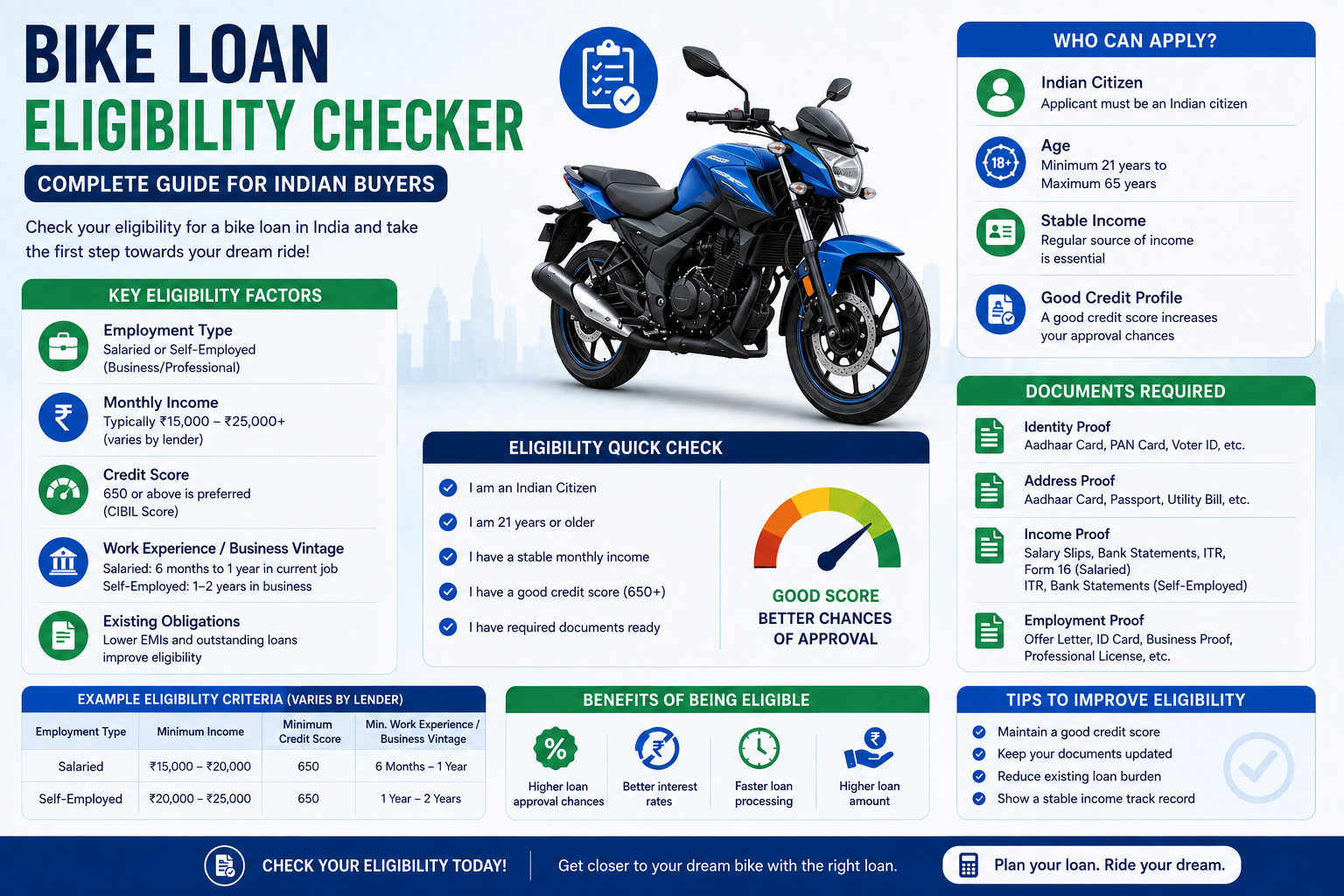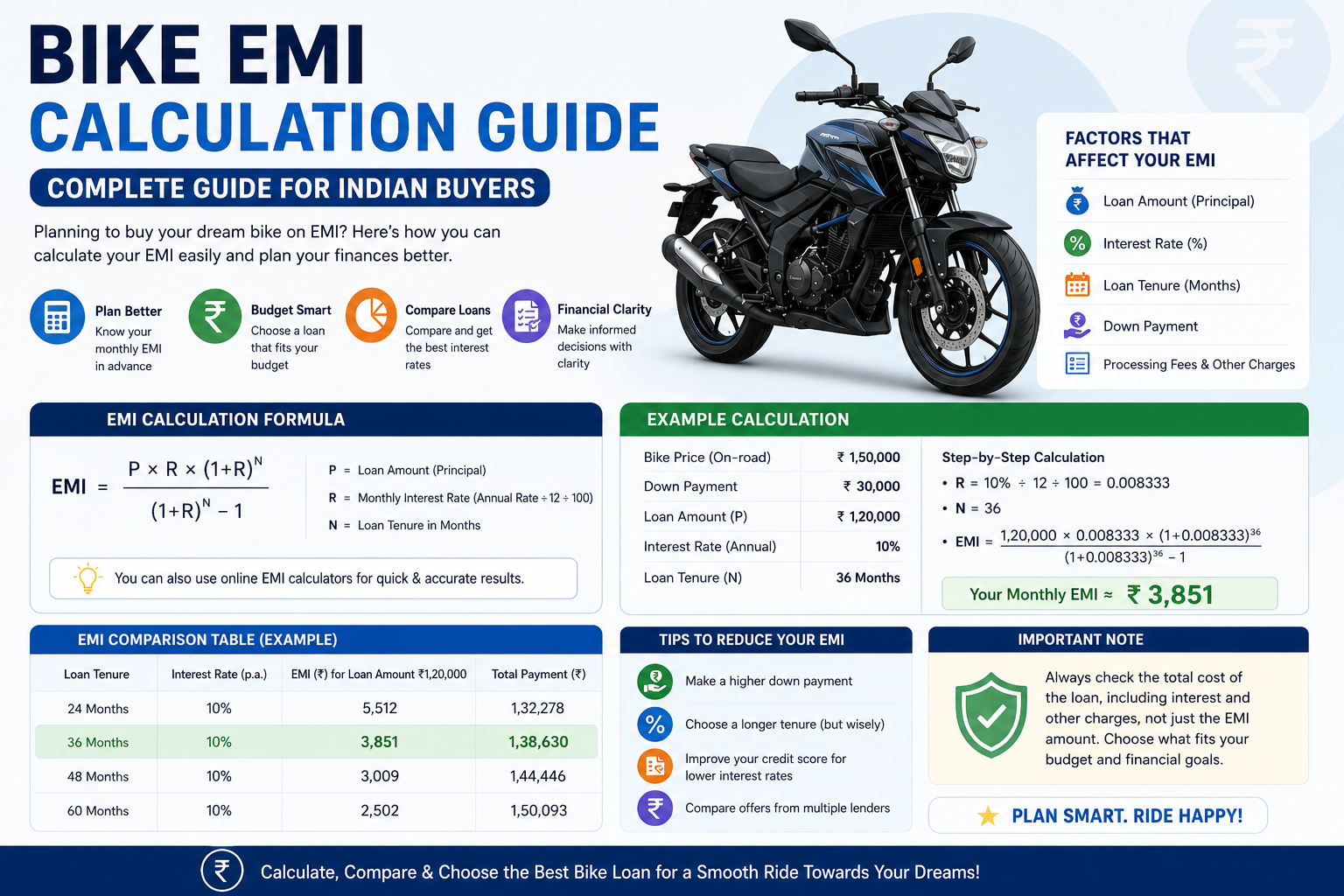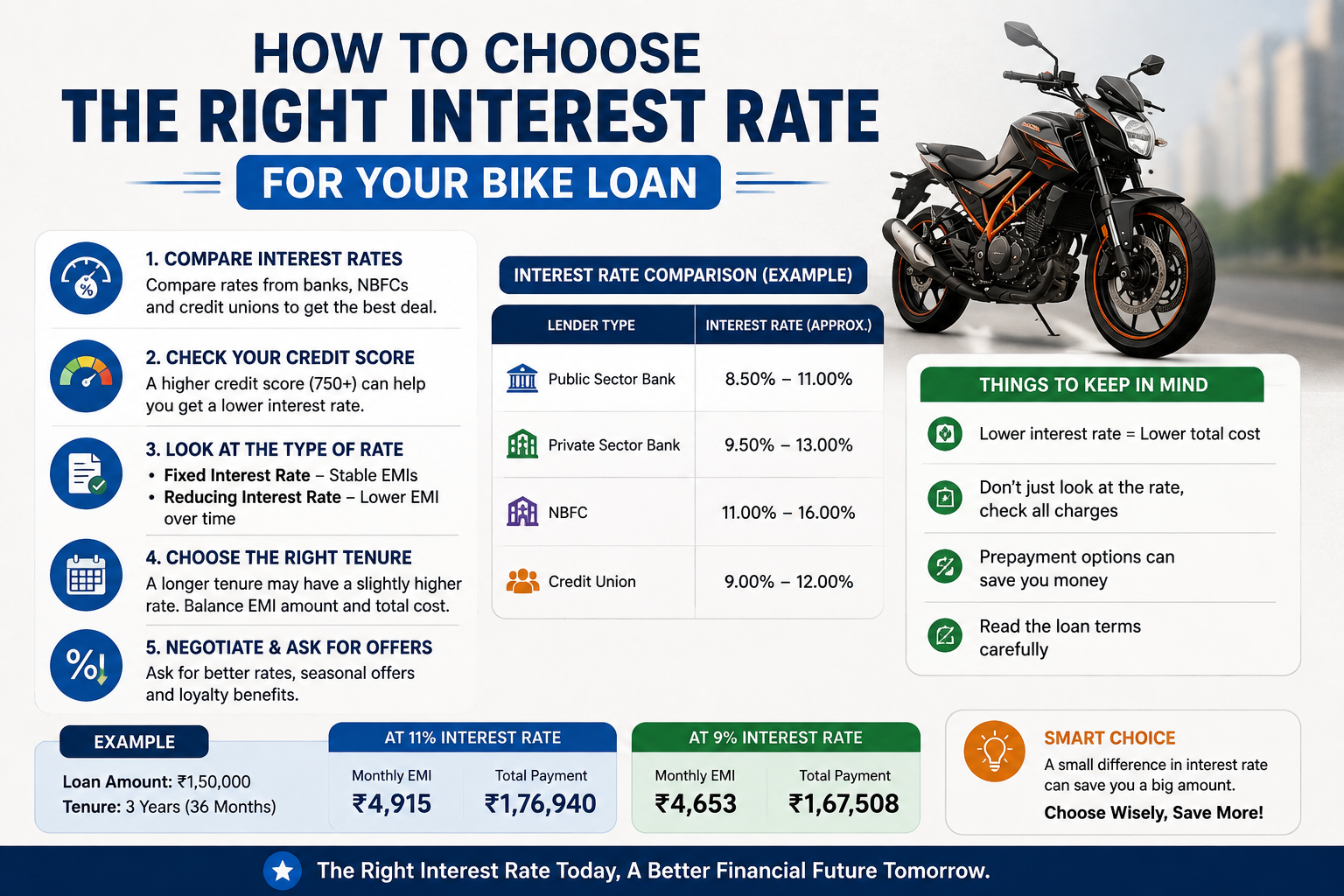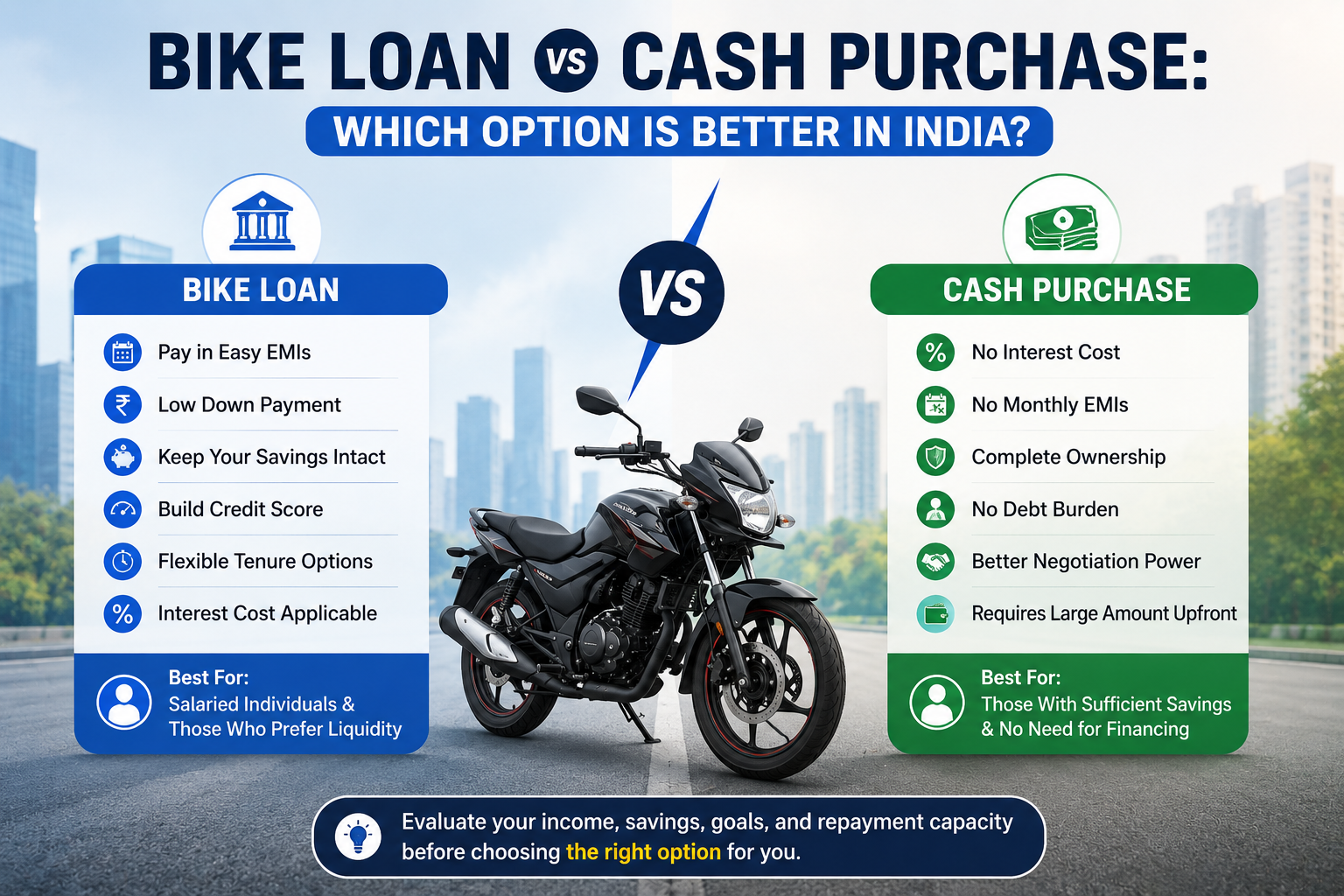
Buying a bike is an exciting milestone, but one of the biggest decisions buyers face is whether to pay cash upfront or take a bike loan. Both options have their own advantages and drawbacks depending on your financial situation, credit profile, and long-term goals. This article compares bike loan vs cash purchase in India to help you decide which path suits you best.
Buying a Bike with Cash
Advantages of Cash Purchase
- No Interest Burden: When you pay cash, you avoid interest charges completely. This means the bike’s on-road price is the only amount you pay, with no extra cost added over time.
- No EMI Stress: There’s no monthly repayment to track, no due dates to remember, and no risk of penalty charges for missed payments.
- Better Negotiation Power: Dealers often prefer cash buyers since it simplifies the transaction. This can sometimes help you negotiate a better price or additional accessories.
- No Credit Score Dependency: You don’t need a good credit score or loan approval process, making it a straightforward option for anyone with sufficient savings.
Disadvantages of Cash Purchase
- Reduces Liquidity: Paying a lump sum can drain your savings, leaving less money for emergencies or other financial goals.
- Opportunity Cost: The money used for the bike could have been invested elsewhere for potential returns, especially if you have access to good investment options.
Buying a Bike on Loan
Advantages of Loan Purchase
- Preserves Savings: A loan lets you keep your savings intact for emergencies, investments, or other financial needs while still getting the bike you want.
- Builds Credit History: Timely EMI payments can improve your credit score, which helps with future loan approvals, including home or car loans.
- Manageable Monthly Outgo: Instead of a large one-time expense, the cost is spread over months or years, making it easier on your monthly budget.
- Access to Better Models: A loan may allow you to afford a higher-end bike that would otherwise be out of reach with immediate cash savings.
Disadvantages of Loan Purchase
- Interest Cost: Loans come with interest charges, which increase the overall cost of the bike compared to paying cash.
- EMI Commitment: You need to ensure steady income to manage monthly EMIs, and missing payments can hurt your credit score and attract penalties.
- Processing and Hidden Charges: Loans often carry processing fees, documentation charges, and sometimes prepayment penalties if you want to close the loan early.
Cash vs Loan: Key Comparison Table
| Factor | Cash Purchase | Bike Loan |
|---|---|---|
| Interest Cost | None | Applicable |
| Impact on Savings | High (lump sum) | Low (spread over time) |
| Credit Score Building | No | Yes |
| Monthly Commitment | None | EMI required |
| Approval Process | Not needed | Credit check required |
| Negotiation Power | Often better | Limited |
Which Option Should You Choose?
The right choice depends on your financial priorities. If you have sufficient savings and prefer a debt-free purchase, paying cash saves you from interest costs and keeps things simple. This works well for buyers who value peace of mind over investment opportunities.
On the other hand, if you want to preserve your savings for emergencies or investments, or if you want to build a credit history for future financial needs, a bike loan can be a smarter choice. It also allows you to manage your cash flow better, especially if your monthly income comfortably covers the EMI.
A middle path many buyers choose is a partial down payment combined with a smaller loan amount. This reduces the interest burden while keeping some cash in hand for emergencies.
Tips for Making the Right Decision
- Assess your savings buffer: Ensure you have at least three to six months of expenses saved before using cash for a big purchase.
- Compare loan interest rates: If choosing a loan, shop around for the best interest rate and shortest comfortable tenure.
- Calculate total cost: Use an EMI calculator to compare the total repayment amount against the cash price to understand the real cost of borrowing.
- Consider your credit goals: If building credit history matters for future loans, a well-managed bike loan can help.
- Avoid over-borrowing: Only take a loan amount that fits comfortably within your monthly budget.
Conclusion
Both cash and loan options have their place depending on individual financial circumstances. Cash purchase saves you from interest costs and monthly commitments, while a loan helps preserve savings and build credit history. The best choice is the one that aligns with your financial stability, future goals, and comfort with monthly repayments. Take time to calculate the real cost of both options before making your final decision.
Frequently Asked Questions (FAQ)
Q1: Is it better to buy a bike with cash or a loan in India? It depends on your financial situation. Cash avoids interest costs, while a loan helps preserve savings and build credit history.
Q2: Does taking a bike loan help improve credit score? Yes, timely EMI payments on a bike loan can positively impact your credit score over time.
Q3: Is a down payment required even when using cash? No, cash purchase means paying the full amount upfront, so no down payment or EMI structure applies.
Q4: What is a good middle option between cash and full loan? Making a partial down payment and taking a smaller loan for the remaining amount can balance interest cost and liquidity.
Q5: Does paying cash always guarantee a better bike price? Not always, but cash buyers sometimes have more negotiation power with dealers compared to loan buyers.