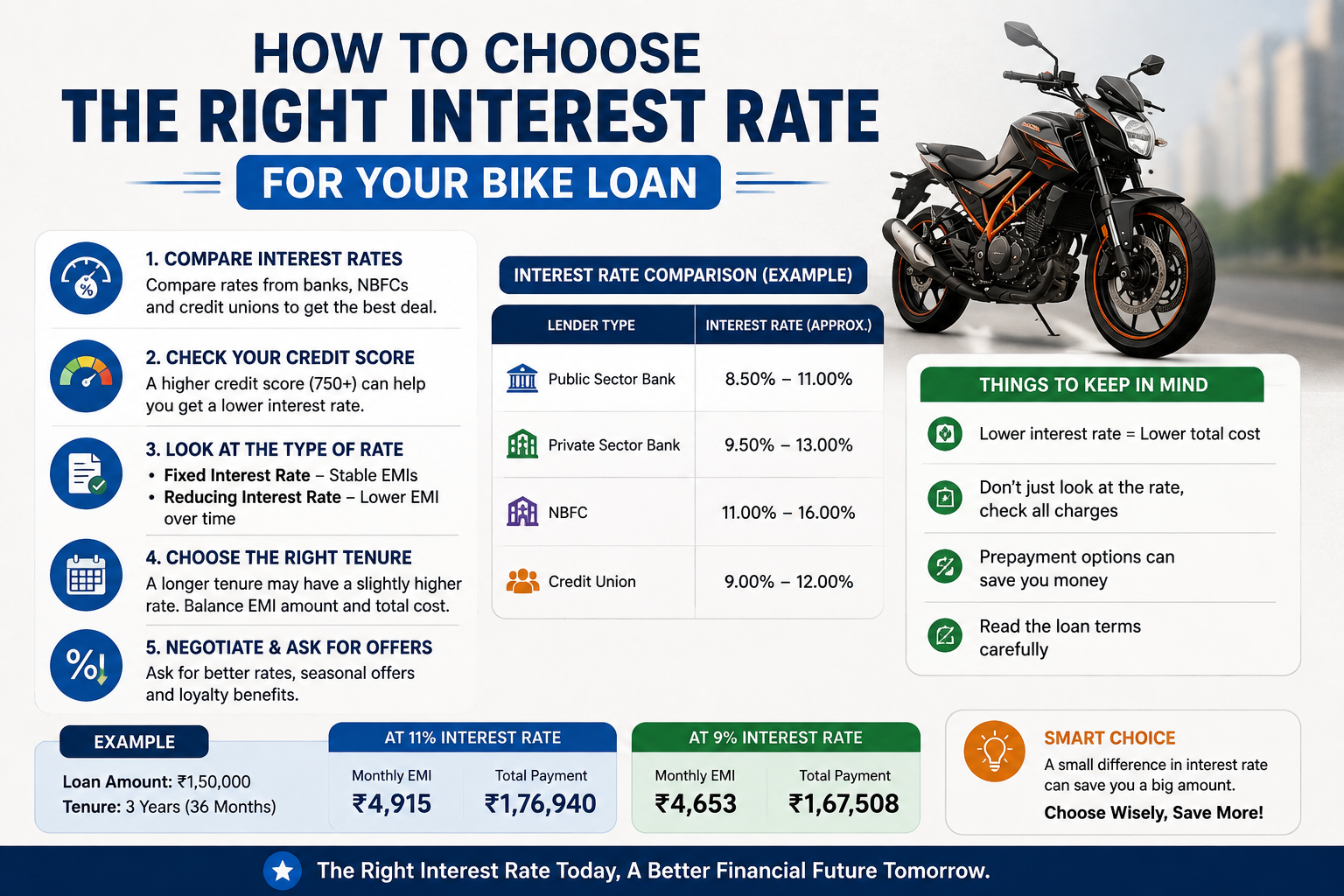
Choosing the right interest rate for a bike loan can make a significant difference to your total repayment amount. Even a small difference of 1-2% can add up to thousands of rupees over the loan tenure. With so many banks and NBFCs offering two-wheeler loans in India, knowing how to evaluate and choose the best interest rate is essential before signing any agreement. This guide walks you through the key factors to consider.
1. Understand Fixed vs Floating Interest Rates
Bike loans in India usually come with a fixed interest rate, meaning your EMI stays the same throughout the loan tenure. Some lenders may also offer floating rates linked to market conditions, though this is less common for two-wheeler loans compared to home loans. A fixed rate offers predictability, making it easier to budget your monthly expenses without worrying about rate fluctuations.
2. Compare Rates Across Multiple Lenders
Never settle for the first loan offer you receive at the dealership. Banks, NBFCs, and dealership-linked finance companies often have different rates for the same bike model. Public sector banks may offer relatively lower rates, while NBFCs might charge slightly higher rates but offer faster approval and flexible eligibility criteria. Checking at least three to four lenders helps you identify the most competitive offer.
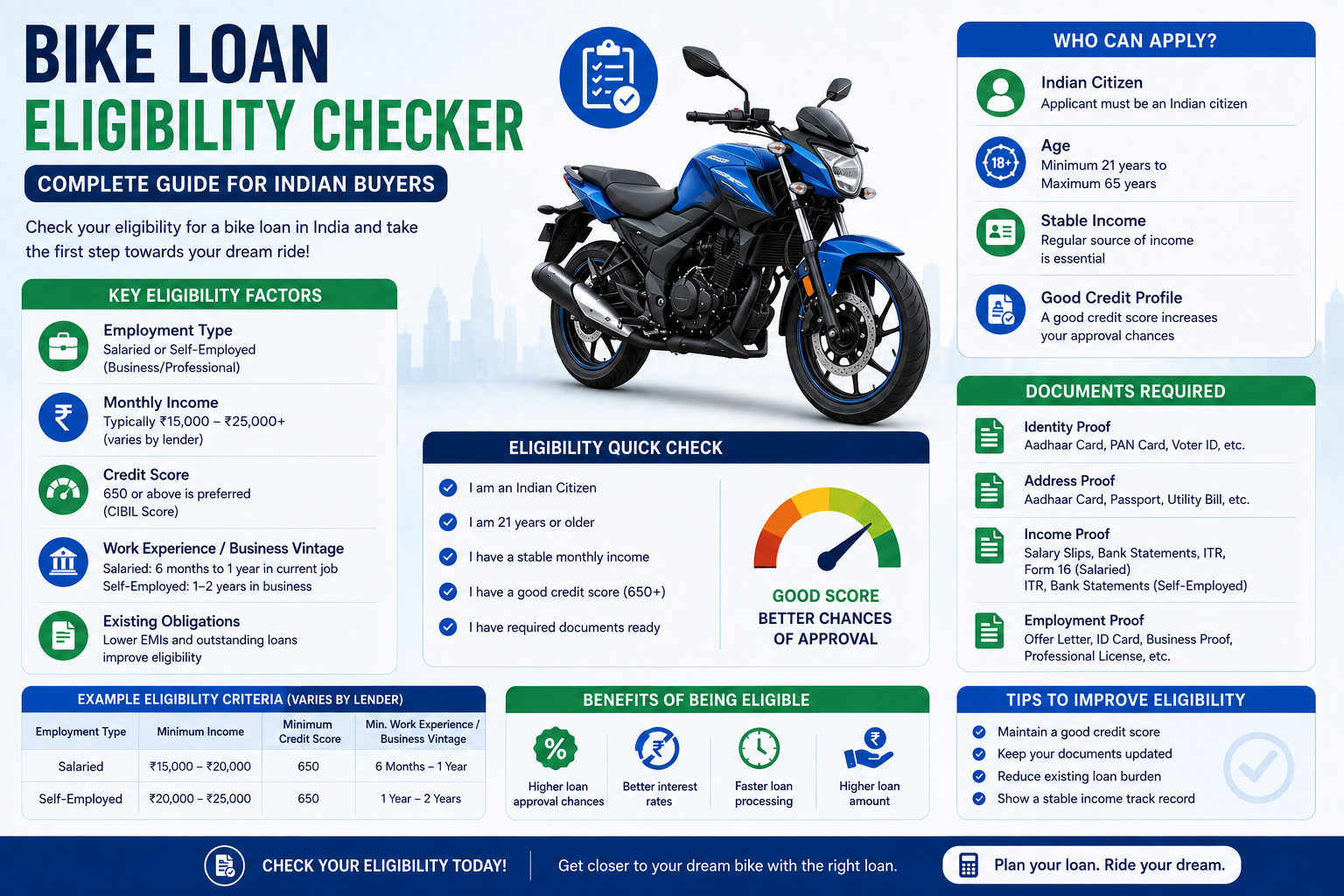
3. Check Your Credit Score First
Your credit score has a direct impact on the interest rate you’re offered. A CIBIL score of 750 or above generally qualifies for the lowest available rates, while a lower score may result in higher interest or loan rejection. Before applying, check your credit report for errors and clear any pending dues to improve your score and negotiating position.
4. Look at the Effective Rate, Not Just the Advertised Rate
Some lenders advertise a low headline interest rate but add processing fees, documentation charges, or insurance bundling that increases the effective cost of the loan. Always ask for the annual percentage rate (APR) or effective interest rate, which includes all charges, to get a true picture of what you’re paying.
5. Consider the Loan Tenure’s Impact on Rate and Cost
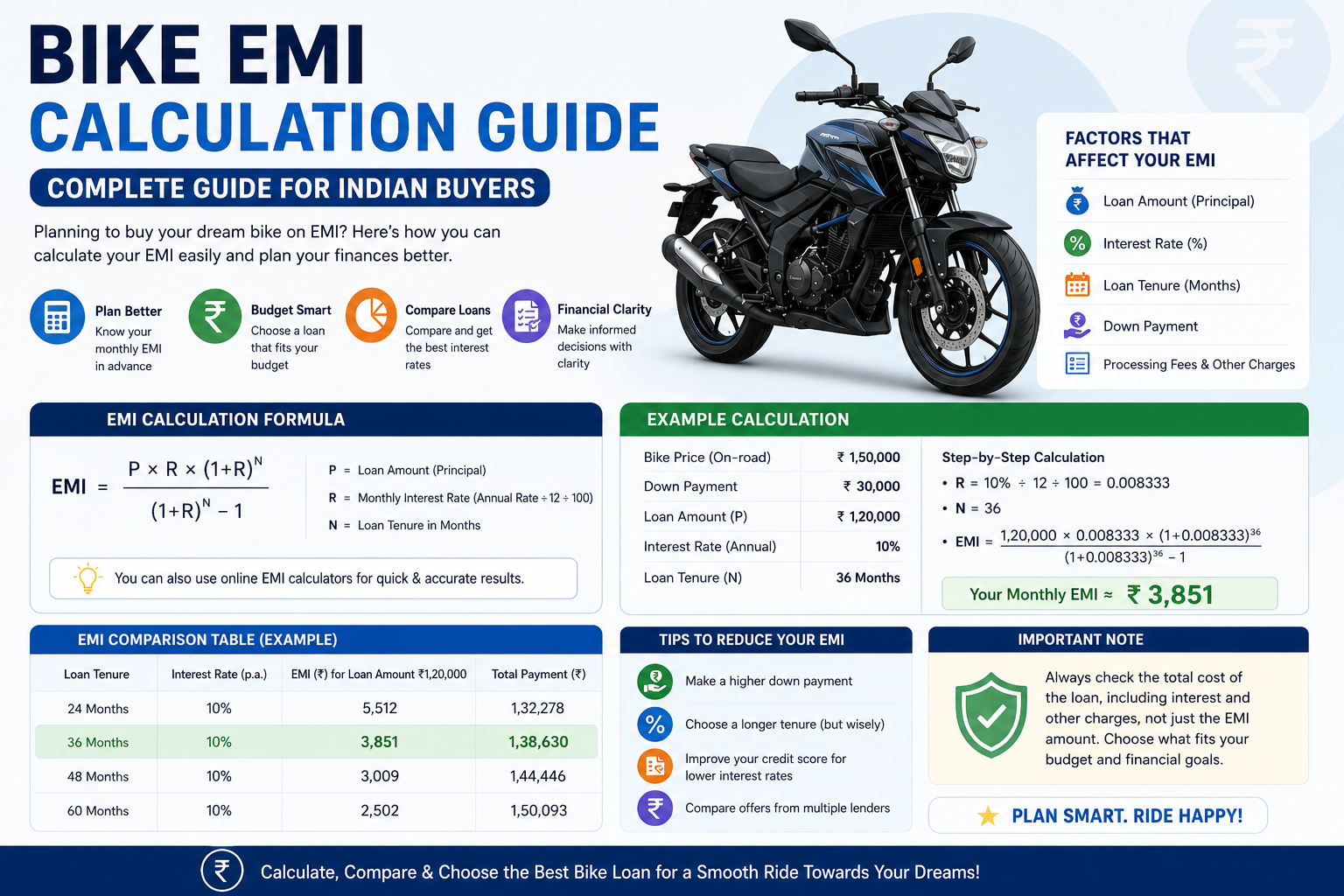
Interest rates can sometimes vary slightly based on the loan tenure you choose. A shorter tenure may come with a marginally different rate but results in significantly lower total interest paid, since the loan is repaid faster. A longer tenure might seem attractive with lower EMIs but usually increases the total interest cost over time. Balance the tenure and rate together rather than looking at them separately.
6. Factor in Down Payment Amount
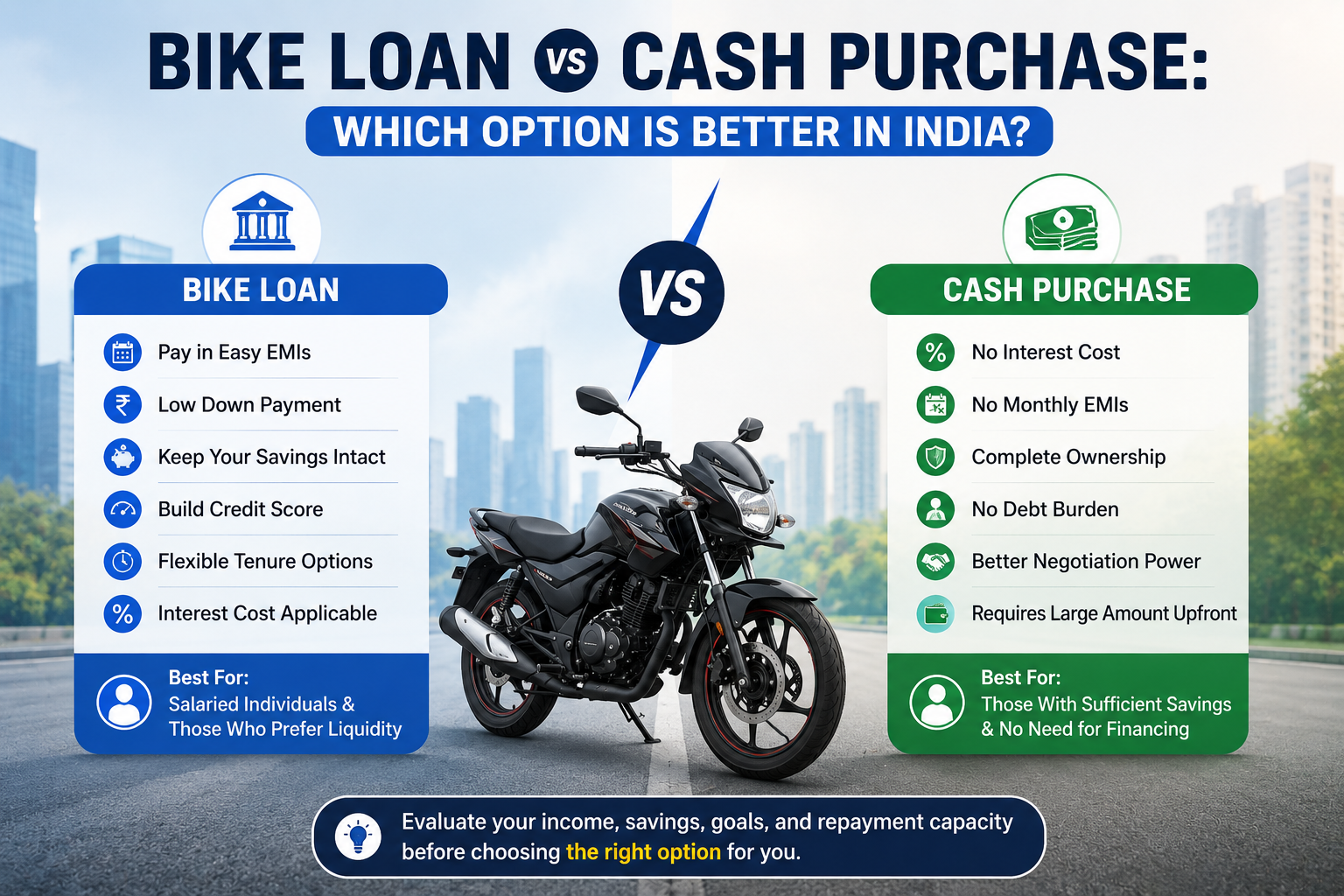
A higher down payment reduces the loan amount, which can sometimes help you negotiate a better interest rate since the lender’s risk is lower. Lenders often view a smaller loan-to-value ratio favorably, which may translate into a more competitive rate offer.
7. Check for Special Offers and Festive Discounts
Banks and NBFCs frequently run promotional interest rates during festive seasons or year-end sales. Dealerships may also partner with specific lenders to offer subsidized rates on select bike models. Keep an eye on these offers, but always verify the complete terms since promotional rates sometimes come with shorter tenure options or specific eligibility conditions.
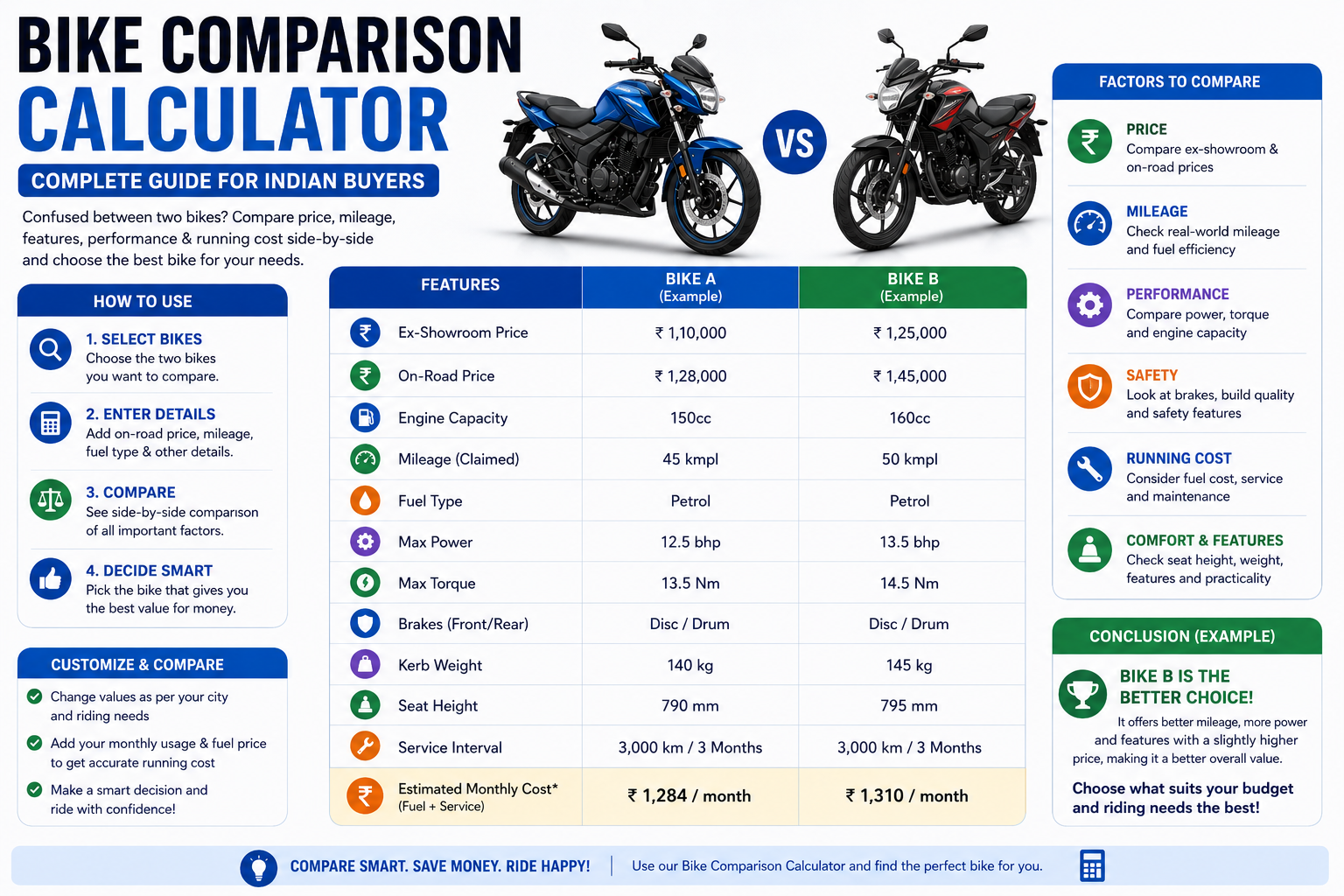
8. Use an EMI Calculator to Compare Real Costs
Before finalizing a lender, use an online EMI calculator to input different interest rates, loan amounts, and tenures. This helps you visualize the actual difference in monthly EMI and total repayment between offers, making it easier to choose the most cost-effective option rather than relying on the interest rate figure alone.
9. Read the Fine Print on Prepayment and Penalty Charges
A lower interest rate isn’t always the best deal if the lender charges high penalties for prepayment or late payments. Check whether the loan allows early closure without heavy charges, as this flexibility can save you money if your financial situation improves during the loan tenure.
10. Negotiate Based on Your Relationship with the Bank
If you already have a savings account, fixed deposit, or existing loan with a particular bank, you may be eligible for preferential interest rates as an existing customer. It’s worth checking with your primary bank before exploring other lenders, since a good banking relationship can sometimes result in a better rate offer.
Conclusion
Choosing the right interest rate for a bike loan requires more than just picking the lowest advertised number. Comparing multiple lenders, checking your credit score, understanding the effective rate including all charges, and considering tenure and down payment together can help you secure the most affordable loan. Taking the time to research and calculate properly ensures you don’t end up paying more than necessary over the life of your loan.
Frequently Asked Questions (FAQ)
Q1: What is a good interest rate for a bike loan in India? Interest rates vary by lender and credit profile, but buyers with a good credit score can generally access more competitive rates. It’s best to compare current offers across multiple banks and NBFCs.
Q2: Does a higher credit score always guarantee a lower interest rate? A higher credit score improves your chances of getting a lower rate, but the final offer also depends on the lender’s policies, loan amount, and tenure.
Q3: Should I choose a bank or an NBFC for a bike loan? Banks may offer lower rates but stricter eligibility, while NBFCs often provide faster approval with slightly higher rates. Compare both based on your priorities.
Q4: What is the difference between the advertised rate and the effective rate? The advertised rate is the headline interest figure, while the effective rate includes processing fees and other charges, giving a more accurate picture of the total cost.
Q5: Can I negotiate the interest rate on a bike loan? Yes, especially if you have a good credit score, existing relationship with the bank, or are making a higher down payment, which can improve your negotiating position.
Q6: Do festive offers always provide the best interest rate? Not always. Festive offers can be attractive, but it’s important to check the complete terms, including tenure restrictions and eligibility conditions, before assuming it’s the best deal.